Minggu, 21 Juli 2013

Get Free Ebook Eyeshield 21, Vol. 31

Get Free Ebook Eyeshield 21, Vol. 31

This motivating publication becomes one that is extremely booming. After published, this publication can swipe the market and book enthusiasts to always lack this book. And also now, we will certainly not allow you go out anymore to obtain this publication. Why need to be Eyeshield 21, Vol. 31 As a publication lover, you have to understand that delighting in guide to read must relate to just how you precisely require currently. If they are not way too much significance, you can take the means of the ideas to develop for brand-new inspirations.

Eyeshield 21, Vol. 31

Eyeshield 21, Vol. 31


Eyeshield 21, Vol. 31


Get Free Ebook Eyeshield 21, Vol. 31

Need resources? From any type of sort of guides? Try Eyeshield 21, Vol. 31 This publication can offer you the motivation for resolving your obligations? Getting brief deadline? Are you still perplexed in obtaining the brand-new motivation? This book will be constantly readily available for you. Yeah, naturally, this schedule will certainly concern with the exact same topic of this book. When you really require the suggestions connected to this similar topic, you might not need to be confused to seek for various other resource.

Do you require the literature sources? Law or national politics books, religious beliefs, or sciences? Well, to prove it, juts seek the title or motif that you require based upon the categories given. However, previous, you are below in the great site where we display the Eyeshield 21, Vol. 31 as one of your sources. Even this is not too called much; you could recognize and also understand why we actually advise you to read this complying with book.

Nevertheless, the presence of this publication really heals that you need to alter that mind. Not all best publications utilize the hard impression to take. Therefore, you should be so better to get over the visibility of the book to get all finest. This term associates with the content of this book. Also it comes with one of the most favorite subject to speak about; the visibility of language and words that are combined with the history of the writer will actually come appropriately

However, reading the book Eyeshield 21, Vol. 31 in this site will lead you not to bring the published publication all over you go. Just save the book in MMC or computer system disk as well as they are offered to check out whenever. The thriving system by reading this soft documents of the Eyeshield 21, Vol. 31 can be introduced something new habit. So currently, this is time to verify if reading could boost your life or otherwise. Make Eyeshield 21, Vol. 31 it surely work and also get all benefits.

Eyeshield 21, Vol. 31

About the Author

Yusuke Murata was born July 3, 1978 in Miyagi, Japan. He won the 122th HopStep Award prize(1995) by "Partner". and won the 51th Akatsuka Award 2nd prize(1998) by "Samui Hanashi".

Read more

Product details

Series: Eyeshield 21 (Book 31)

Paperback: 192 pages

Publisher: VIZ Media LLC; Original ed. edition (April 6, 2010)

Language: English

ISBN-10: 1421529270

ISBN-13: 978-1421529271

Product Dimensions:

7.5 x 0.6 x 5 inches

Shipping Weight: 6.4 ounces (View shipping rates and policies)

Average Customer Review:

4.8 out of 5 stars

8 customer reviews

Amazon Best Sellers Rank:

#484,603 in Books (See Top 100 in Books)

Okay so for how little I paid for this volume I got basically a brand new book. There was no damage to it no stickers I had to peel off, and it came two days ahead of schedule. I am very happy with this purchase and can't wait to save up to get the next couple volumes.

An amazing series!!!! I love it so much and I just wish it was on Kindle!!!

Love it!

The book was in great condition.

Book was in great condition and easy to read.

:-)

Came in good condition

Er . . . yeah. Devilbats face off against the White Knights! GO SENA!!!

Eyeshield 21, Vol. 31 PDF
Eyeshield 21, Vol. 31 EPub
Eyeshield 21, Vol. 31 Doc
Eyeshield 21, Vol. 31 iBooks
Eyeshield 21, Vol. 31 rtf
Eyeshield 21, Vol. 31 Mobipocket
Eyeshield 21, Vol. 31 Kindle

Eyeshield 21, Vol. 31 PDF

Eyeshield 21, Vol. 31 PDF

Eyeshield 21, Vol. 31 PDF

Sabtu, 20 Juli 2013

PDF Download

PDF Download

Nonetheless, it will certainly depend on exactly how you take the book. As currently, we will reveal you a book called It can be your reading material to delight in currently. When obtaining the book as what you want to check out, you could acquire what exactly choose from this publication. It is the way to overcome the existence of creating the book to review. This book is not just guide that you might require in this time. Make sure that occasionally, you will certainly require as one of the support.


PDF Download

Exactly how is your time to invest the free time in this day? Are you starting to do a brand-new activity? Will you aim to review? Everyone recognizes and also concurs that reading is a great routine. You have to check out and read, in addition the book with several benefits. However, is that real? There are only few individuals that enjoy to review. If you are among them, it is excellent for you. We will certainly give you a brand-new book that could make your life improved to be better.

The perks to consider checking out the books are involving enhance your life high quality. The life top quality will not simply regarding just how much knowledge you will obtain. Even you review the fun or enjoyable books, it will certainly aid you to have boosting life high quality. Really feeling fun will lead you to do something perfectly. Additionally, the e-book will provide you the lesson to take as a great need to do something. You may not be useless when reviewing this publication

When increasing and also promoting this publication we are also so sure that you can get the lesson and also expertise quickly. Why? With your basic expertise and thoughts, your option to mix with the lessons used by this book is very impressive. You could find the best choice of just how today book in this lesson is obtained. As well as now, when you are actually locate of this sort of book topic, you could obtain the file of guide in this sit.

After getting the outstanding possibility of guide here, you could not disregard that becomes one of the books that you will certainly select. Yet, you may not take the book now due to some problems. When you're really certain about the lesson and also perception got from this book, you must begin reviewing immediately. It is what that makes you constantly really feel amazing and also impressed when knowing a brand-new lessons regarding a publication.

Product details

File Size: 799 KB

Print Length: 172 pages

Simultaneous Device Usage: Up to 4 simultaneous devices, per publisher limits

Publisher: Routledge; 1 edition (October 12, 2018)

Publication Date: October 12, 2018

Sold by: Amazon Digital Services LLC

Language: English

ASIN: B07JVV53GK

Text-to-Speech:

Enabled

P.when("jQuery", "a-popover", "ready").execute(function ($, popover) {

var $ttsPopover = $('#ttsPop');

popover.create($ttsPopover, {

"closeButton": "false",

"position": "triggerBottom",

"width": "256",

"popoverLabel": "Text-to-Speech Popover",

"closeButtonLabel": "Text-to-Speech Close Popover",

"content": '

' + "Text-to-Speech is available for the Kindle Fire HDX, Kindle Fire HD, Kindle Fire, Kindle Touch, Kindle Keyboard, Kindle (2nd generation), Kindle DX, Amazon Echo, Amazon Tap, and Echo Dot." + '
'

});

});

X-Ray:

Not Enabled

P.when("jQuery", "a-popover", "ready").execute(function ($, popover) {

var $xrayPopover = $('#xrayPop_540F707656B011E9B6CF70C0288A6A0A');

popover.create($xrayPopover, {

"closeButton": "false",

"position": "triggerBottom",

"width": "256",

"popoverLabel": "X-Ray Popover ",

"closeButtonLabel": "X-Ray Close Popover",

"content": '

' + "X-Ray is not available for this item" + '
',

});

});

Word Wise: Enabled

Lending: Not Enabled

Screen Reader:

Supported

P.when("jQuery", "a-popover", "ready").execute(function ($, popover) {

var $screenReaderPopover = $('#screenReaderPopover');

popover.create($screenReaderPopover, {

"position": "triggerBottom",

"width": "500",

"content": '

' + "The text of this e-book can be read by popular screen readers. Descriptive text for images (known as “ALT text”) can be read using the Kindle for PC app and on Fire OS devices if the publisher has included it. If this e-book contains other types of non-text content (for example, some charts and math equations), that content will not currently be read by screen readers. Learn more" + '
',

"popoverLabel": "The text of this e-book can be read by popular screen readers. Descriptive text for images (known as “ALT text”) can be read using the Kindle for PC app if the publisher has included it. If this e-book contains other types of non-text content (for example, some charts and math equations), that content will not currently be read by screen readers.",

"closeButtonLabel": "Screen Reader Close Popover"

});

});

Enhanced Typesetting:

Enabled

P.when("jQuery", "a-popover", "ready").execute(function ($, popover) {

var $typesettingPopover = $('#typesettingPopover');

popover.create($typesettingPopover, {

"position": "triggerBottom",

"width": "256",

"content": '

' + "Enhanced typesetting improvements offer faster reading with less eye strain and beautiful page layouts, even at larger font sizes. Learn More" + '
',

"popoverLabel": "Enhanced Typesetting Popover",

"closeButtonLabel": "Enhanced Typesetting Close Popover"

});

});

Amazon Best Sellers Rank:

#1,452,398 Paid in Kindle Store (See Top 100 Paid in Kindle Store)

PDF
EPub
Doc
iBooks
rtf
Mobipocket
Kindle

PDF

PDF

PDF
PDF

Senin, 08 Juli 2013

Download Genreflecting: A Guide to Popular Reading Interests, 6th Edition (Genreflecting Advisory Series)

Download Genreflecting: A Guide to Popular Reading Interests, 6th Edition (Genreflecting Advisory Series)

When you're a newbie visitor or the one that aim to start love analysis, you can select Genreflecting: A Guide To Popular Reading Interests, 6th Edition (Genreflecting Advisory Series) as the most effective alternative. This publication is very popular amongst the viewers. This is among the factors we recommend you to attempt analysis this publication. Even this is not kind of book that will give large opportunity; you could get it step by step. As exactly what we constantly found out about discovering can be done by steps. You cannot get to the expertise simultaneously by doing whatever, it will certainly require some processes.

Genreflecting: A Guide to Popular Reading Interests, 6th Edition (Genreflecting Advisory Series)

Genreflecting: A Guide to Popular Reading Interests, 6th Edition (Genreflecting Advisory Series)


Genreflecting: A Guide to Popular Reading Interests, 6th Edition (Genreflecting Advisory Series)


Download Genreflecting: A Guide to Popular Reading Interests, 6th Edition (Genreflecting Advisory Series)

Introducing brand-new item as a book is very remarkable for us. We can use a new better thing repeatedly. When many people aim to seek for the new coming publications, we are below as the carrier. As an excellent carrier, we constantly supply all collections of books, from several sources. Therefore, guides from several countries are readily available and ideal below. This internet site is really a fantastic publication service provider, also in the soft data.

Why need to be Genreflecting: A Guide To Popular Reading Interests, 6th Edition (Genreflecting Advisory Series) in this site? Obtain a lot more revenues as what we have informed you. You can discover the various other alleviates besides the previous one. Relieve of getting the book Genreflecting: A Guide To Popular Reading Interests, 6th Edition (Genreflecting Advisory Series) as what you want is also given. Why? We provide you many kinds of the books that will not make you really feel weary. You can download them in the web link that we give. By downloading and install Genreflecting: A Guide To Popular Reading Interests, 6th Edition (Genreflecting Advisory Series), you have actually taken properly to select the convenience one, compared with the hassle one.

Currently, you could learn more priceless time to spend for this precious book. Reading this book will lead you to open a new globe that comes for obtaining something priceless and valuable a lot. Genreflecting: A Guide To Popular Reading Interests, 6th Edition (Genreflecting Advisory Series) is among the collections of guides in the checklists of internet site. You could discover the soft file based upon the link that we show. When you need much better concept of checking out reference, pick this book as soon as possible. We have this book also for delivering the book in order to suggest extra.

Connected to this problem, you will certainly likewise figure out May books that can be resources for your life. It is not only this sort of subject; you might also locate others as good as this book to serve. Obviously, what we offer is what finest in this globe. So, you could not be stressed to pick Genreflecting: A Guide To Popular Reading Interests, 6th Edition (Genreflecting Advisory Series) as one of inspiring analysis book. Now, regardless of what to do, you should get this publication as well as get adhering to the system to be much easier and quicker.

Genreflecting: A Guide to Popular Reading Interests, 6th Edition (Genreflecting Advisory Series)

Review

"[G]enreflecting continues to be a very user-friendly source for RA. This is the best edition yet." - Reference & User Services Quarterly"Classic resource." - Booklist"This reference guide to genre fiction offers so much more than just a range of suggestions to assist readers' advisors." - VOYA

Read more

About the Author

Diana Tixier Herald, winner of the Margaret E. Monroe Library Adult Services Award, is program and outreach manager at Delta County Libraries, Delta, CO, and an author, readers' advisory consultant, workshop presenter, and speaker.Wayne A. Wiegand is the F. William Summers Professor of Library and Information Studies, and Professor of American Studies, Florida State University, Tallahassee. Published widely, Dr. Wiegand has received numerous awards for distinguished professional activities, including the Herbert Putnam Award, the Justin Winsor Award, and the ALISE Research Paper Award.

Read more

Product details

Series: Genreflecting Advisory Series

Paperback: 584 pages

Publisher: Libraries Unlimited; 6 edition (December 30, 2005)

Language: English

ISBN-10: 1591582865

ISBN-13: 978-1591582861

Product Dimensions:

7 x 1.2 x 10 inches

Shipping Weight: 2.6 pounds (View shipping rates and policies)

Average Customer Review:

4.2 out of 5 stars

7 customer reviews

Amazon Best Sellers Rank:

#1,567,267 in Books (See Top 100 in Books)

I received this book in the mail yesterday and read it, off and on, all day. I can't believe all the reference material that is found here. As a true bibliophile, I have many books about books in my collection, but this one has moved right to the top as my favorite. It lists many of the best modern works in print and will help me, in the future, to have more discerning tastes in the books I read. I am completely satisfied and highly recommend it to others.

This used to be a text book in library school. Easy to use for reference.

"Genreflecting" is a good reference for those in a position where they are asked to recommend books for library patrons or book store customers.

"Genreflecting" has quickly become the go-to guide in the rapidly growing field of Readers Advisory, but the revered tome remains curiously flawed in spite of numerous revisions. Once again, extremely specialized and esoteric subgenres are represented ("1950's new wave sci-fi" and "TSR's Advanced Dungeons and Dragons Franchise Books") while much more prominent subgenres are completely ignored (Steampunk, Urban Fantasy, etc.). As when dealing with genres in any capacity, the bare minimum subjects and then their iterations should be covered before further specialization, but "Genreflecting" continues to misunderstand and ignore this necessity. There are a few other confusing choices ("Mystery" is nonexistent, instead automatically grouped under crime), and several outright baffling decisions (Don Delillo's "White Noise" under "Adventure" next to Michael Crichton and Tom Clancy books!?) that leave the aspiring Reader Advisor mistrustful at best. The book could also greatly use capsule reviews, summaries, or justifications for inclusion next to each title ("Swashbuckling romp with romantic undertones") instead of the naked lists of titles that it continues to offer. "Genreflecting" remains, at best, a starting point for the Advisor who will undoubtedly end up turning to internet sources for more detailed and in-depth information; but then why wouldn't they just start out there and be done with it? "Genreflecting" definitely needs a major overhaul in the next revision to continue to justify its existence and price.

I am so glad that this volume exists because I care much about advising readers, and the intent of this tool is right on. I appreciate the suggestions in each genre, and subgenre.However, the presentation of the titles is so inconsistent that it puzzles me that this could be a sixth edition--it seems more like a draft. Several of the titles are elaborately annotated, while others are simply listed without supporting information. I wish that the titles were treated more consistently.I do appreciate that this advisory series from Libraries Unlimited exists. However since this is their flagship volume that has gone through multiple editions, I expect a higher standard.

This book is a very valuable resource for public librarians acting as a reader's adviser ("I like this author, who/what else would I like?"), but I can't imagine anyone having the time to be poring over the pages as a collection development tool.Genreflecting is also a great reference for writing or literature studies students who are studying genre - along with lists of authors that they can pursue, there are very lucid discussions of the genres, and it's a good starting point for assignments in this area. (I used it for this purpose at Uni, and liked it so much that I tried to buy a copy - unfortunately it was between editions at the time.)

Invaluable to librarians (even though an older edition) for use in reader's advisory.Useful to avid readers to have your own copy. Look up your favorite authors and find recommendations for others you wil like.

Genreflecting: A Guide to Popular Reading Interests, 6th Edition (Genreflecting Advisory Series) PDF
Genreflecting: A Guide to Popular Reading Interests, 6th Edition (Genreflecting Advisory Series) EPub
Genreflecting: A Guide to Popular Reading Interests, 6th Edition (Genreflecting Advisory Series) Doc
Genreflecting: A Guide to Popular Reading Interests, 6th Edition (Genreflecting Advisory Series) iBooks
Genreflecting: A Guide to Popular Reading Interests, 6th Edition (Genreflecting Advisory Series) rtf
Genreflecting: A Guide to Popular Reading Interests, 6th Edition (Genreflecting Advisory Series) Mobipocket
Genreflecting: A Guide to Popular Reading Interests, 6th Edition (Genreflecting Advisory Series) Kindle

Genreflecting: A Guide to Popular Reading Interests, 6th Edition (Genreflecting Advisory Series) PDF

Genreflecting: A Guide to Popular Reading Interests, 6th Edition (Genreflecting Advisory Series) PDF

Genreflecting: A Guide to Popular Reading Interests, 6th Edition (Genreflecting Advisory Series) PDF

Senin, 29 April 2013

Free Download Capital in the Twenty-First Century, by Thomas Piketty

Free Download Capital in the Twenty-First Century, by Thomas Piketty

When some people believe that this is a tough book to read, we will inform you that it becomes one of the smarter suggestions ahead with something various. The various points of the Capital In The Twenty-First Century, By Thomas Piketty with other books are lasting en route just how the writer improvise as well as choose the subject generally and remarkably. It will certainly be timeless and countless making all people feel embellished and surprised of this book.
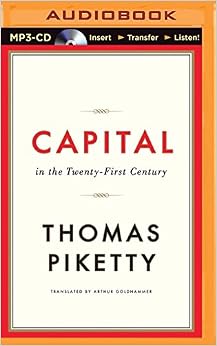
Capital in the Twenty-First Century, by Thomas Piketty

Capital in the Twenty-First Century, by Thomas Piketty


Capital in the Twenty-First Century, by Thomas Piketty


Free Download Capital in the Twenty-First Century, by Thomas Piketty

How many times we should state that book and also analysis is essential for individuals living? The book presence is not only for the purchased and even used stacked of papers. This is a really priceless thing that could change people living to be better. Even you are constantly asked to check out a publication and also review again, you will certainly really feel so tough when told to do it. Yeah, lots of people additionally really feel that. Feel that it will certainly be so monotonous to read publications, from elementary to grownups.

The remedy to obtain this publication is that we do not over you the cost-free book. Yet, we provide you the cost-free details concerning Capital In The Twenty-First Century, By Thomas Piketty Why need to be this book to review and also where is the location to obtain it, also the soft data forms prevail inquiries to utter. In this web site, we don't just supply this publication. We have still great deals of books to check out. Yeah, we are on-line library that is always filled with suggested publications.

Sooner you obtain the e-book Capital In The Twenty-First Century, By Thomas Piketty, quicker you could enjoy reviewing guide. It will be your rely on keep downloading guide Capital In The Twenty-First Century, By Thomas Piketty in given web link. This way, you can truly decide that is served to get your very own e-book on the internet. Right here, be the very first to get the book qualified Capital In The Twenty-First Century, By Thomas Piketty and be the first to know how the author suggests the message and expertise for you.

Featuring some experiences to find the good book will not make you failed in choosing various other publication to check out. As this publication, you could not be sorry for as well as feel doubt to pick it as your reading material. This Capital In The Twenty-First Century, By Thomas Piketty has verified that it has excellent content, good outcome, great chance, and good condition. The author has actually produced this book with very impressive product to check out by everyone. This is just what makes the people plan to read this publication.

Capital in the Twenty-First Century, by Thomas Piketty

Review

A New York Times #1 BestsellerAn Amazon #1 BestsellerA Wall Street Journal #1 BestsellerA USA Today BestsellerA Sunday Times BestsellerWinner of the Financial Times and McKinsey Business Book of the Year AwardWinner of the British Academy MedalFinalist, National Book Critics Circle Award“It is a great work, a fearsome beast of analysis stuffed with an awesome amount of empirical data, and will surely be a landmark study in economics.” —The Week“It seems safe to say that Capital in the Twenty-First Century, the magnum opus of the French economist Thomas Piketty, will be the most important economics book of the year—and maybe of the decade. Piketty, arguably the world’s leading expert on income and wealth inequality, does more than document the growing concentration of income in the hands of a small economic elite. He also makes a powerful case that we’re on the way back to ‘patrimonial capitalism,’ in which the commanding heights of the economy are dominated not just by wealth, but also by inherited wealth, in which birth matters more than effort and talent.” —New York Times“Over the last decade or so, economist Thomas Piketty has made his name central to serious discussions of inequality…. Piketty expands upon his empirical work of the last 10 years, while also setting forth a political theory of inequality. This last element of the book gives special attention to tax policy and makes some provocative suggestions—new and higher taxes on the very rich.” —Forbes“Essential reading for citizens of the here and now.” —Kirkus, starred review“An extraordinary sweep of history backed by remarkably detailed data and analysis… Piketty’s economic analysis and historical proofs are breathtaking.” ―The Guardian“What makes Thomas Piketty’s Capital in the Twenty-First Century such a triumph is that it seems to have been written specifically to demolish the great economic shibboleths of our time…. Piketty’s magnum opus.”―Salon“[A] 700-page punch in the plutocracy’s pampered gut… It’s been half a century since a book of economic history broke out of its academic silo with such fireworks.” ―The Times“Thomas Piketty of the Paris School of Economics has done the definitive comparative historical research on income inequality in his Capital in the Twenty-First Century.” ―New York Review of Books“The book aims to revolutionize the way people think about the economic history of the past two centuries. It may well manage the feat.” ―The Economist“Piketty’s Capital in the Twenty-First Century is an intellectual tour de force, a triumph of economic history over the theoretical, mathematical modeling that has come to dominate the economics profession in recent years.” ―Washington Post“Piketty has written an extraordinarily important book…. In its scale and sweep it brings us back to the founders of political economy.” ―Financial Times“A sweeping account of rising inequality… Piketty has written a book that nobody interested in a defining issue of our era can afford to ignore.” ―New Yorker“Stands a fair chance of becoming the most influential work of economics yet published in our young century. It is the most important study of inequality in over fifty years.” ―The Nation

Read more

About the Author

Thomas Piketty is Professor at the Paris School of Economics and at the École des Hautes Études en Sciences Sociales (EHESS).

Read more

Product details

MP3 CD

Publisher: Brilliance Audio; Unabridged edition (February 17, 2015)

Language: English

ISBN-10: 1491591617

ISBN-13: 978-1491591611

Product Dimensions:

5.2 x 0.7 x 6.8 inches

Shipping Weight: 3.2 ounces (View shipping rates and policies)

Average Customer Review:

4.4 out of 5 stars

1,863 customer reviews

Amazon Best Sellers Rank:

#504,863 in Books (See Top 100 in Books)

Thomas Piketty's book, "Capital in the Twenty First Century," has been resoundingly endorsed by Nobel Prize winning economist Paul Krugman. Since the reactionaries were freaking out, I couldn't resist reading it and finding out for myself what the hoopla was all about. The reason for the reactionary freak out is explained below.Anyone who has bothered to read this book must admit that the writer is rigorous in his analyses and my impression was the writer eschews prejudgment. Piketty provides exhaustive data throughout in a fascinating historical analysis of capital and the inevitable pitfalls of indecent inequality of wealth ("...the `first globalization of finance and trade (1870-1914) is in many ways similar to the `second globalization' which has been underway since the 1970's." and, "...capitalism automatically generates arbitrary and unsustainable inequalities that radically undermine the meritocratic values on which democratic societies are based.") There were reasons for the financial shocks and the world wars of the 20th century, and if we're not paying attention...Piketty notes that, "Economists are all too often preoccupied with petty mathematical problems of interest only to themselves." Nevertheless, the essential economic equations and trend analyses are sufficiently addressed and easily understandable by all. He notes that economics should be considered a branch of social science, i.e., "...politics is ubiquitous and...economic and political changes are inextricably intertwined and must be studies together."If nothing else, the reader is warned, "...all citizens should take a serious interest in money, its measurement, the facts surrounding it, and its history. Those who have a lot of it [money] never fail to defend their interests. Refusing to deal with numbers rarely serves the interests of the least well-off."So why are reactionaries freaking out over this book? Piketty concludes that national debt can only be reduced by: repudiation (bad), inflation (horrible), austerity (really horrible), or a progressive tax on capital (reasonable). Further, he recommends that the only reasonable way to address indecent wealth inequality is a progressive global tax on wealth, which in turn requires global transparency of accounts and an end to foreign tax havens; he goes on to say none of these measures will be easy, but does offer practical suggestions. Clearly, the plutocrats would panic over popularization of such a suggestion, and it only takes a word or two from them to spin up their PACs and puppet organizations (I won't name names) into blindly trashing these rational suggestions. Thus the one-star reviews from those who haven't read the book.Other specifics of note:* His rational explanation of what central banks do and why they are necessary is excellent and should be understood by all.* His discussion of past and recent European economic issues, the creation the Euro, and administration by the ECB and European Committee should be of great interest to most Americans.* The fact that income taxes were not invented by Woodrow Wilson and had been used successfully in Europe for many decades before that is probably news to most Americans.* The real reasons why the gold standard had to be abandoned and is no longer feasible should be better understood by many.* His explanation of what "rentiers" are (i.e. those with sufficient wealth to live off dividends, rents, and other financial instruments) is something that should be better understood by all. At some point, wealth takes on a life of it's own whenever r>g and this and what amounts to regressive taxation at the top of the pyramid, are the driving force behind income inequality.* His explanation of the recent phenomenon of "super managers" who demand salaries in the tens of millions (the ones that piss everyone off), and how it was a result of the conservative revolution of the 1980s' is something that should be understood by all.Though it's a tough slog for me, but I highly recommend this book be read be all. I recommend someone write a "Reader's Digest" version that could reference the original, since the average reader may struggle with it.

Brilliant! Most reviews have touched upon its contents. I would say two things:One, everyone should read it. This is not a book just for economists. This is a book for everyone no matter your profession or stage in life because it illuminates the arch of wealth and where we are now. We are at a pivotal point in history and what we do could lead to WWIII or huge leap forward for mankind.Two, to truly understand you need a basic understanding of macro economics (and some micro). If you already have that, great. Otherwise, just google the terms and study as you go along.Not an easy read but surprisingly not a difficult one either. Compared to other economic books this one is very accessible.

In his introduction to this book, Piketty states, “When the rate of return on capital exceeds the rate of growth of output and income, as it did in the nineteenth century and seems quite likely to do again in the twenty-first, capitalism automatically generates arbitrary and unsustainable inequalities that radically undermine the meritocratic values on which democratic societies are based.” He further states that “Intellectual and political debate about the distribution of wealth has long been based on an abundance of prejudice and a paucity of fact.” He then addresses this paucity with the presentation and analysis of the results the project he led to acquire an enormous volume of historical data about global income and wealth.In the introduction, he briefly reviews the contributions but also the errors of earlier debate without data. These included Malthus’s concern with overpopulation and the need to end all welfare, Ricardo’s principle of scarcity with population and production growing as land becomes increasingly scarce, and Marx’s principle of infinite accumulation with the industrial revolution leading to no limit on the accumulation of capital (which did not consider coming social democracy, technological progress, and how to organize society without private capital). The Kuznets Curve of 1955 introduced data from US tax returns and Kuznets’s own estimates of national income to conclude that inequality increased in the early phase but declined in the later phases of industrialization. Unfortunately, this curve greatly understated the roles of the World Wars and violent economic and political shocks that led to the reduction in inequality between 1914 and 1945 and failed to explain the rising inequality after 1970.Piketty seeks to contribute “to the debate about the best way to organize society…to achieve a just social order….achieved effectively under rule of law…subject to democratic debate.” He states he has “no interest in denouncing inequality or capitalism per se…as long as they are justified.” He worked briefly in the US and found the work of US economists unconvincing. “There had been no significant effort to collect historical data on the dynamics of inequality since Kuznets, yet the profession continued to churn out purely theoretical results without even knowing (the) facts.” He found that “the discipline of economics has yet to get over its childish passion for mathematics and the purely theoretical and often highly ideological speculation.” Subsequently, he returned to France and set out to collect the missing data.He gathered data in two main categories: 1) inequality in distribution of income and 2) inequality in the distribution of wealth and the relation of wealth to income. For income, he built the World Top Incomes Database (WTID), which is based on the joint work of some thirty researchers around the world. This data series begins in each country when an income tax was established (usually 1910-1920 but as early as the 1880s in Japan and Germany). For wealth his sources included estate tax returns (usually dating back to the 1920s, but in a few cases as far back as the French Revolution), the relative contributions of inherited wealth and savings, and measures of the total stock of national wealth. In collecting as complete and consistent a set of historical sources as possible, he had two advantages over previous authors—a longer historical perspective (now including data from the 2000s) and advances in computer technology.Piketty reports two major conclusions from his study. “The first is that one should be wary of any economic determinism in regard to inequalities of wealth and income (that they emerge according to immutable natural laws). The history of the distribution of wealth has always been deeply political and it cannot be reduced to purely economic mechanisms. In particular, the reduction of inequality…between 1910 and 1950 was above all a consequence of war and of policies adopted to cope with the shocks of war.” “The resurgence of inequality after 1980 is due largely to political shifts…especially in regard to taxation and finance. The history of inequality is shaped by the way…actors view what is just…as well as the relative power of those actors.”The second conclusion is “that the dynamics of wealth distribution reveal powerful mechanisms pushing alternately toward convergence (equality) and divergence (inequality)….There is no natural, spontaneous process to prevent destabilizing ineqalitarian forces from prevailing permanently.” “Over a long period of time, the main force in favor of greater equality (convergence) has been the diffusion of knowledge and skills.” Other proposed forces for greater equality, such as advanced technology creating a need for greater skills or class warfare giving way to less divisive generational warfare as the population ages, appear to be largely illusory.“No matter how potent a force the diffusion of knowledge and skills may be, it can nevertheless be thwarted and overwhelmed by powerful forces pushing…toward greater inequality (divergence).” With respect to income, the spectacular increase in inequality from labor income, particularly in the US and UK, largely reflects the recent marked separation of the top managers of large firms from the rest of the population, not because of increased productivity, but because they can set their own remuneration. This separation is amplified by marginal tax rates that actually decrease for the highest incomes. Capital income from large fortunes also contributes to income inequality but may be understated due to hidden off-shore accounts and by producing only the relatively small portion of income needed for expenses while the rest remains within the fortune. (Fig. I.1 shows income inequality in the US from 1910 to 2010.)With respect to wealth, inequality (divergence) is increased when the rate of return on capital significantly exceeds the growth rate of the economy (r > g) as it did until the nineteenth century and is likely to in the twenty-first century. “Under such conditions it is inevitable that inherited wealth will dominate wealth amassed from a lifetime’s labor by a wide margin” and lead to extreme inequality. This increasing inequality of wealth is greatly amplified by structural factors leading to higher rates of increase for the largest fortunes that are no longer related to whatever entrepreneurial activities were at the onset of their origin. (Fig. I.2 shows wealth inequality in Europe from 1870 to 2010.) This analysis also shows a major shift in the main components of wealth from land, slaves (in the US), and colonies (in Europe) to domestic capital and housing.Historically, the rate of return on capital was 4.5-5% from antiquity to 1913, fell to 1.5% by 1950, and is rising again to 4% or more by 2012 and beyond. During the same period, the global rate of growth was close to zero before the industrial revolution, rose to 1.5% by 1913 and to 3.5% in the mid to late twentieth century (due to catch-up after World War II and in the developing world), and is now falling and projected to be 1-1.5% in the twenty-first century. Thus the unusual fall of the return on capital (r) below growth (g) in the mid twentieth century was associated with a temporary reduction in the rate of increasing inequality. (Fig 10.10 shows a comparison of the return on capital [r] to growth [g] from antiquity to 2100.)This review barely scratches the surface of the core contribution of this book, which is the enormous volume of data and analysis it provides. The numerical information is presented in a very well developed series of 97 illustrations and 18 tables. This information is used as support for extensive analysis and discussion of the many aspects of historical, present, and likely future inequality that often contradict positions related to ideology and simplistic models. An excellent 22 page overview of “A Social State for the Twenty-First Century” is provided at the beginning of the fourth and final part of the book. This is followed by “Rethinking the Progressive Income Tax,” “The Question of the Public Debt,” the author’s preference for “A Global Tax on Capital,” and finally, the conclusion.The conclusion reiterates that the principal destabilizing force leading to ever-increasing inequality is a return on capital (r) significantly higher than the rate of growth of income and output (g) for long periods of time. Hence wealth accumulated in the past grows more rapidly than output and wages, and the entrepreneur inevitably tends to become a rentier no longer of use in promoting growth. A progressive annual tax on capital would be the right solution to this problem, although it would require a high level of international cooperation. Piketty objects to the expression “economic science” which implies little to do with the logic of politics or culture in conclusions about inequality. He prefers the expression “political economy” which considers economics as a sub discipline of the social sciences, alongside history, sociology, anthropology, and political science. He insists that economic and political changes are inextricably entwined and must be studied together.This review is supplemented by a relatively random selection of multiple comments and assertions from the book: “The nature of capital has changed: it once was mainly land but has become primarily housing plus industrial and financial assets.”“Capital…is always risk-oriented and entrepreneurial, at least at its inception; yet it always tends to transform itself into rents as it accumulates….”With respect to global inequality, the industrial revolution led to growth of Europe and America’s share of global output to two to three times their share of population. This share is now rapidly decreasing due to higher growth in developing economies in the “catch-up” phase than in mature economies.Europe and America’s share of global production of goods and services rose from about 30-35% in 1700 to 70-80% from 1900 to 1980, fell to 50% by 2010, and may go as low as 20-30% later in the twenty-first century.European and American national inequality rose to record heights in 1910, decreased markedly by the 1940s due to the world wars and Great Depression, then began a rapid return to high levels after the 1970s, particularly in the US.The share of national income for the top 10% in Europe was over 45% in 1910, under 25% in 1970, and about 30% in 2010. In the US it was over 40% in 1910, under 30% in 1970, and nearly 50% in 2010.“Numerous studies mention a significant increase in the share of national income in the rich countries going to profits and capital after 1970, along with the concomitant decrease in the share going to wages and labor.”In the past several decades, the share of national income for the top 0.1% increased from 2 to 10% in the US, from 1.5 to 2.5% in France and Japan, and from 1 to 2% in Sweden.“It is important to note the considerable transfer of US national income—on the order of 15 points—from the poorest 90% to the richest 10% since 1980”— 5 to 7 times greater than the 2 to 3 points in Europe and Japan.“The vast majority (60 to 70%)…of the top 0.1% of the income hierarchy in 2000-2010 consists of top managers. By comparison, athletes, actors, and artists of all kinds make up less than 5% of this group.”“At the very highest levels salaries are set by the executives themselves or by corporate compensation committees whose members usually earn comparable salaries….”“It is when sales and profits increase for external reasons that executive pay rises most rapidly. This is particularly clear in the case of US corporations…pay for luck.”Global inequality of wealth in the early 2010s is comparable to that of Europe in 1900-1919. The top 0.1% own nearly 20%, the top 1% about 50%, the top 10% between 80 and 90%, and the bottom half less than 5%.The share of national wealth ownership in Europe for the top 10% and top 1% was 90% and over 50% in 1910, 60% and 20% in 1970, and about 63% and 24% in 2010. During this time, the share for the 50th to the 90th percentile increased from 5% to 40%, creating a middle class, but the share for the bottom 50% remained at 5%.In the US, shares for the top 10% and top 1% were about 80% and 45% in 1910, 64% and 30% in 1970, and about 70% and 34% in 2010—with a much more rapid increase after 1970 than in Europe, reaching 70% and 34% versus 63% and 24% by 2010 (while the bottom half claim just 2%).Inherited wealth is estimated to account for 60-70% of the largest fortunes worldwide. This figure is lower than the 80-90% reached during the belle Epoque, but trending strongly toward a return to that level.Forbes magazine divides billionaires into three groups—pure heirs, heirs who subsequently grow their wealth, and pure entrepreneurs, with each of these groups representing about a third of the total.Due to increased life expectancy, the average age of heirs at the age of inheritance has increased from thirty in the nineteenth century to fifty in the twenty-first century, although with larger inheritances.Today, transmission of capital by gift is nearly as important as transmission by inheritance. This change counters increased life expectancy and accounts for almost half of the present inheritance flows.“No matter how justified inequalities of wealth may be initially, fortunes can grow and perpetuate themselves beyond all reasonable limits and beyond any possible rational justification in terms of social utility.”Large fortunes experience increasing rates of growth related to size alone independent of their origins—10% from $15-30 billion, about 9% from $1-15 billion, about 8% from$500 million to $1 billion, about 7% from $100-500 million, and about 6% below $100 million for university endowments.From 1990 to 2010, the fortune of Bill Gates, the Microsoft genius, grew from $4 billion to $50 billion, while that of Liliane Bettencourt, a cosmetics heiress who never worked a day in her life, grew at a similar rate from $2 billion to $25 billion.In 2013, sovereign wealth funds were worth $5.3 trillion ($3.2 trillion from petroleum exporting states and 2.1 trillion from nonpetroleum states like China, Hong Kong, and Singapore), similar to the total of $5.4 trillion for Forbes billionaires. Together, these sources account for 3% of global wealth.Large amounts of unreported financial assets are held in tax havens—approximately 10% according to the negative global balance of payments (more money leaves countries than enters them).In the US, parents’ income has become an almost perfect predictor of university access—average income of parents of Harvard students is currently about $450,000.“Broadly speaking, the US and British policies of economic liberalization (after 1980)…neither increased growth nor decreased it.”The US economy was much more innovative in 1950-1970 than in 1990-2010….Productivity growth was nearly twice as high in the former period as in the latter.In most countries taxes have (or will soon) become regressive at the top of the income hierarchy.”The optimal tax rate in the developed countries is probably above 80%.One of the most important reforms (is) to establish a unified retirement scheme based on individual accounts with equal rights for everyone, no matter how complex one’s career path.Debt often becomes a backhanded form of redistribution of wealth from the poor to the rich (who as a general rule ought to be paying taxes rather than lending).Inflation is at best a very imperfect substitute for a progressive tax on capital. It is hard to control, and much of the desired effect disappears once it becomes embedded in expectations.Defining the meaning of inequality and justifying the position of the winners is a matter of vital importance, and one can expect to see all sorts of misrepresentations of the facts in service of the cause. No hypocrisy is too great when economic and financial elites are obliged to defend their interests—and that includes economists, who currently occupy an enviable place the US income hierarchy.“Modern meritocratic society, especially in the United States, is much harder on the losers, because it seeks to justify domination on the grounds of justice, virtue, and merit, to say nothing of the insufficient productivity of those at the bottom.”The history of the progressive tax over the course of the twentieth century suggests that the risk of a drift toward oligarchy is real and gives little reason for optimism about where the United States is headed.

Capital in the Twenty-First Century, by Thomas Piketty PDF
Capital in the Twenty-First Century, by Thomas Piketty EPub
Capital in the Twenty-First Century, by Thomas Piketty Doc
Capital in the Twenty-First Century, by Thomas Piketty iBooks
Capital in the Twenty-First Century, by Thomas Piketty rtf
Capital in the Twenty-First Century, by Thomas Piketty Mobipocket
Capital in the Twenty-First Century, by Thomas Piketty Kindle

Capital in the Twenty-First Century, by Thomas Piketty PDF

Capital in the Twenty-First Century, by Thomas Piketty PDF

Capital in the Twenty-First Century, by Thomas Piketty PDF

Kamis, 11 April 2013

Download Ebook

Download Ebook

Yeah, even this is a brand-new coming publication; it will not mean that we will provide it rarely. You know in this situation, you can acquire the book by clicking the web link. The link will direct you to obtain the soft documents of guide conveniently and also directly. It will really relieve your method to obtain DDD even you might not go anywhere. Only stay at office or home and also get easy with your web linking. This is simple, fast, and relied on.


Download Ebook

Do you do any of these things that will assist you to be an exceptional personality? Do you do some parts of those? Many people have desire to be an excellent person in all problem. Minimal condition as well as situation doesn't imply that it's restricted to do something better. When you wish to determine to do something much better, it is required for you to take for your support.

That's a typical problem. To overcome this contains, what should do? Reading a book? Surely? Why not? Book is among the sources that lots of people count on of it. Even it will rely on guide type and also title, or the author; publications constantly have positive thoughts and also minds. is just one of the alternatives for you to earn you looking forward for your life. As recognized, reviewing will certainly lead you for a much better method. The way that you take of course will certainly be analogously with your situation.

The will also plant you excellent way to reach your ideal. When it becomes a reality for you, you can review it in your leisure. Why do not you try it? Really, you will unknown how specifically this publication will be, unless you review. Although you do not have much time to complete this publication rapidly, it actually does not have to end up hurriedly. Select your priceless spare time to utilize to read this publication.

Interested in this book is must. You may be other people that need the info and news concerning the topic that have actually been written in this publication. The concern regarding the interesting subject pertaining to the condition today. When you have determined to acquire this book, you could go to the link below. It will directly worry you to acquire the book as your own. As well as the soft data is what you could offer to you. Allow's get guide and also read it currently.

Product details

File Size: 1595 KB

Print Length: 85 pages

Page Numbers Source ISBN: 152105780X

Simultaneous Device Usage: Unlimited

Publisher: Progressive Management (July 1, 2016)

Publication Date: July 1, 2016

Sold by: Amazon Digital Services LLC

Language: English

ASIN: B01HUIY29O

Text-to-Speech:

Enabled

P.when("jQuery", "a-popover", "ready").execute(function ($, popover) {

var $ttsPopover = $('#ttsPop');

popover.create($ttsPopover, {

"closeButton": "false",

"position": "triggerBottom",

"width": "256",

"popoverLabel": "Text-to-Speech Popover",

"closeButtonLabel": "Text-to-Speech Close Popover",

"content": '

' + "Text-to-Speech is available for the Kindle Fire HDX, Kindle Fire HD, Kindle Fire, Kindle Touch, Kindle Keyboard, Kindle (2nd generation), Kindle DX, Amazon Echo, Amazon Tap, and Echo Dot." + '
'

});

});

X-Ray:

Not Enabled

P.when("jQuery", "a-popover", "ready").execute(function ($, popover) {

var $xrayPopover = $('#xrayPop_5519D80E56B911E9B3EAB218C0D04A38');

popover.create($xrayPopover, {

"closeButton": "false",

"position": "triggerBottom",

"width": "256",

"popoverLabel": "X-Ray Popover ",

"closeButtonLabel": "X-Ray Close Popover",

"content": '

' + "X-Ray is not available for this item" + '
',

});

});

Word Wise: Enabled

Lending: Not Enabled

Enhanced Typesetting:

Enabled

P.when("jQuery", "a-popover", "ready").execute(function ($, popover) {

var $typesettingPopover = $('#typesettingPopover');

popover.create($typesettingPopover, {

"position": "triggerBottom",

"width": "256",

"content": '

' + "Enhanced typesetting improvements offer faster reading with less eye strain and beautiful page layouts, even at larger font sizes. Learn More" + '
',

"popoverLabel": "Enhanced Typesetting Popover",

"closeButtonLabel": "Enhanced Typesetting Close Popover"

});

});

Amazon Best Sellers Rank:

#2,921,409 Paid in Kindle Store (See Top 100 Paid in Kindle Store)

The book gives very good statistical data on women's involvement/ participation in the Arab Spring. There were excellent sources useful to those of us interested in the role of women in the Arab world. It was good to have data on women's participation verified by factual data. Women's roles in the Egyptian Revolt was very impressive. Given the brutality of these three regimes, Egypt, Bahrain, & Yemen it was informative to learn how women worked around their repressive governments and cultural norms to actively participate in the Revolts in their respective countries.The book would have benefitted from vignettes or short stories about individual women who participated in the protests. Not having such stories made the book dry and not as engaging as it could have been. As a scholar focused on Islam and women, the book is useful as is the bibliography.

PDF
EPub
Doc
iBooks
rtf
Mobipocket
Kindle

PDF

PDF

PDF
PDF

Minggu, 07 April 2013

Ebook Download Shinto and Japanese New Religions

Ebook Download Shinto and Japanese New Religions

Shinto And Japanese New Religions. A work could obligate you to always enhance the understanding and encounter. When you have no sufficient time to enhance it straight, you can get the encounter and also understanding from reading the book. As everyone knows, book Shinto And Japanese New Religions is preferred as the window to open the globe. It indicates that reading book Shinto And Japanese New Religions will provide you a brand-new way to find everything that you need. As the book that we will offer right here, Shinto And Japanese New Religions

Shinto and Japanese New Religions

Shinto and Japanese New Religions


Shinto and Japanese New Religions


Ebook Download Shinto and Japanese New Religions

We constantly commit to maintain as well as care about individuals demands of publications. Books as a wonderful points to be sources in the world are constantly required, everywhere and also each time. When you have a lot more resources to take, publications still hold the large powers. One of the effective publications that we will certainly proffer currently is the Shinto And Japanese New Religions It is seemly a publication that provides a different declaration as others. When many individuals aim to get this type of publication with that said fascinating topic, this book comes exposed for you.

This Shinto And Japanese New Religions is extremely appropriate for you as beginner visitor. The visitors will certainly consistently start their reading practice with the favourite motif. They could rule out the writer and also author that produce the book. This is why, this book Shinto And Japanese New Religions is really appropriate to review. However, the concept that is given up this book Shinto And Japanese New Religions will certainly reveal you lots of things. You could start to enjoy also checking out up until the end of the book Shinto And Japanese New Religions.

By downloading this publication soft file, you could begin reviewing Shinto And Japanese New Religions from currently. It will certainly not force you to always read it whenever. Juts use your extra time even couple of mins. This is why when you want to see exactly how the book content is supplied; you should review it from the front web page. Yeah, spend your time to read it. This is our most advised book to review when you wish to go with some trips and trips.

Even we talk about the books Shinto And Japanese New Religions; you could not find the printed books right here. So many collections are given in soft documents. It will specifically provide you much more benefits. Why? The very first is that you might not have to bring guide anywhere by fulfilling the bag with this Shinto And Japanese New Religions It is for guide is in soft file, so you can save it in gadget. Then, you can open up the device almost everywhere and check out the book effectively. Those are some few perks that can be got. So, take all advantages of getting this soft data publication Shinto And Japanese New Religions in this web site by downloading and install in web link offered.

Shinto and Japanese New Religions

Product details

#detail-bullets .content {

margin: 0.5em 0px 0em 25px !important;

}

Audible Audiobook

Listening Length: 2 hours and 58 minutes

Program Type: Audiobook

Version: Unabridged

Publisher: Blackstone Audio, Inc.

Audible.com Release Date: August 22, 2006

Language: English, English

ASIN: B000I0HDMK

Amazon Best Sellers Rank:

In contrast to the other review, I find Kingsley to be an excellent speaker. His 'Gandhi' status in the US makes his a great reader for this and the other Easter Religions audiobooks that he has narrated for this company. The information in here is a mix of really boring Shinto overview (boring because I find Shinto boring, not boring because of the presentation) and really fascinating analysis of Japanese religion syncretism and it's stimulation of many "New Religions" (that's their official term) in the 19th and 20th centuries. It's amazing to compare these developments to the growth of religious diversity in the US.

Full of interesting information, this audio book makes for a good introduction to Japanese religions and spirituality. I was looking forward to hearing Kingsley narrate but, for some reason, he adopts a tone right out of a British war-time newsreel which, while amusing, highlights when the script occasionally oversimplifies topics (carefully explaining them in "Western" terms,) and the piece slips into the patronizing. Nevertheless, the information is clearly presented, aided by voices other than just "newsreel Ben" for quotes from other scholars etc...A small warning for those who are not used to listening to Japanese speaking with a heavy "Katakana English" accent - a few of the Japanese readers might be a little difficult to understand.

Shinto and Japanese New Religions PDF
Shinto and Japanese New Religions EPub
Shinto and Japanese New Religions Doc
Shinto and Japanese New Religions iBooks
Shinto and Japanese New Religions rtf
Shinto and Japanese New Religions Mobipocket
Shinto and Japanese New Religions Kindle

Shinto and Japanese New Religions PDF

Shinto and Japanese New Religions PDF

Shinto and Japanese New Religions PDF

Kamis, 21 Maret 2013

Ebook

Ebook

Just what regarding If that's relevant to your problem, it will certainly not only give those suggestions. It will provide examples, simple as well as straightforward instances of exactly what you need to carry out in settling your issues. It will certainly additionally appear the result and type of guide that reads. Lots of people are falling in love in this book because its power to assist everybody get better.


Ebook

Book fans, when you need an extra book to check out, find guide below. Never ever worry not to discover exactly what you require. Is the your needed book now? That's true; you are really an excellent visitor. This is a best book that originates from wonderful writer to show to you. The book supplies the most effective encounter as well as lesson to take, not only take, however also learn.

Why must be in this site? Obtain more earnings as just what we have actually told you. You can find the various other eases besides the previous one. Reduce of getting guide as just what you really want is also supplied. Why? We offer you numerous kinds of guides that will certainly not make you really feel bored. You could download them in the link that we give. By downloading , you have actually taken properly to pick the convenience one, compared with the inconvenience one.

Own this book immediately after finishing read this site page. By possessing this book, you can have time to spare to read it naturally. Even you will certainly not have the ability to finish it basically time, this is your possibility to transform your life to be far better. So, why do not you save your time even juts few in a day? You could read it when you have spare time in your office, when being in a bus, when being at home before resting, and more others.

Just connect your tool computer or device to the internet attaching. Get the contemporary innovation making your downloading finished. Also you don't wish to read, you can straight close guide soft file and open it later. You can likewise quickly get guide anywhere, considering that it remains in your gadget. Or when being in the workplace, this is additionally suggested to read in your computer system tool.

Product details

File Size: 14073 KB

Publisher: Farrar, Straus and Giroux (February 19, 2019)

Publication Date: February 19, 2019

Language: English

ASIN: B07DZZXY5X

Text-to-Speech:

Enabled

P.when("jQuery", "a-popover", "ready").execute(function ($, popover) {

var $ttsPopover = $('#ttsPop');

popover.create($ttsPopover, {

"closeButton": "false",

"position": "triggerBottom",

"width": "256",

"popoverLabel": "Text-to-Speech Popover",

"closeButtonLabel": "Text-to-Speech Close Popover",

"content": '

' + "Text-to-Speech is available for the Kindle Fire HDX, Kindle Fire HD, Kindle Fire, Kindle Touch, Kindle Keyboard, Kindle (2nd generation), Kindle DX, Amazon Echo, Amazon Tap, and Echo Dot." + '
'

});

});

X-Ray:

Not Enabled

P.when("jQuery", "a-popover", "ready").execute(function ($, popover) {

var $xrayPopover = $('#xrayPop_DFD6318E580011E9A98566706225DA58');

popover.create($xrayPopover, {

"closeButton": "false",

"position": "triggerBottom",

"width": "256",

"popoverLabel": "X-Ray Popover ",

"closeButtonLabel": "X-Ray Close Popover",

"content": '

' + "X-Ray is not available for this item" + '
',

});

});

Word Wise: Enabled

Lending: Not Enabled

Screen Reader:

Supported

P.when("jQuery", "a-popover", "ready").execute(function ($, popover) {

var $screenReaderPopover = $('#screenReaderPopover');

popover.create($screenReaderPopover, {

"position": "triggerBottom",

"width": "500",

"content": '

' + "The text of this e-book can be read by popular screen readers. Descriptive text for images (known as “ALT text”) can be read using the Kindle for PC app and on Fire OS devices if the publisher has included it. If this e-book contains other types of non-text content (for example, some charts and math equations), that content will not currently be read by screen readers. Learn more" + '
',

"popoverLabel": "The text of this e-book can be read by popular screen readers. Descriptive text for images (known as “ALT text”) can be read using the Kindle for PC app if the publisher has included it. If this e-book contains other types of non-text content (for example, some charts and math equations), that content will not currently be read by screen readers.",

"closeButtonLabel": "Screen Reader Close Popover"

});

});

Enhanced Typesetting:

Enabled

P.when("jQuery", "a-popover", "ready").execute(function ($, popover) {

var $typesettingPopover = $('#typesettingPopover');

popover.create($typesettingPopover, {

"position": "triggerBottom",

"width": "256",

"content": '

' + "Enhanced typesetting improvements offer faster reading with less eye strain and beautiful page layouts, even at larger font sizes. Learn More" + '
',

"popoverLabel": "Enhanced Typesetting Popover",

"closeButtonLabel": "Enhanced Typesetting Close Popover"

});

});

Amazon Best Sellers Rank:

#122,485 Paid in Kindle Store (See Top 100 Paid in Kindle Store)

PDF
EPub
Doc
iBooks
rtf
Mobipocket
Kindle

PDF

PDF

PDF
PDF

Label

Recent Posts

Text Widget

Blog Archive